
Albums of the Week: 1985
Albums turning 40 this year

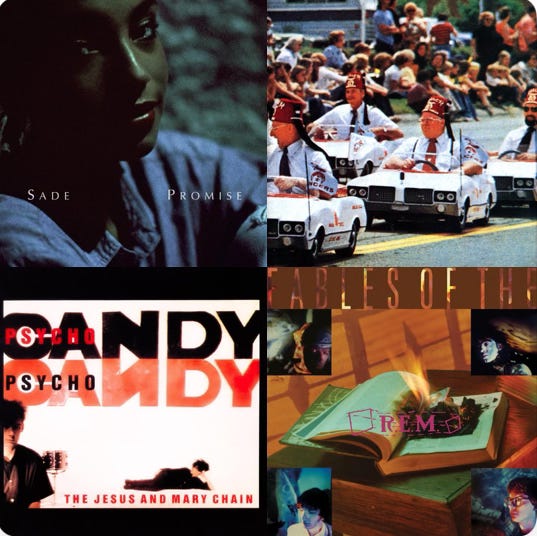
I used to think I hated ‘80s music. For me, music from the ‘80s always felt shiny and overproduced, and at the same time, outdated, due to electronic music technology advancing quite a bit in the decades since then. Being born in 1986 didn’t help either - I was too young to really be aware of ‘80s music while it was happening, and the music my parents showed me as a kid was mostly from the ‘60s and ‘70s. The ‘80s have always been a weird in-between decade that never quite crossed my radar.
I am realizing that this bias against ten-years’ worth of music is probably unnecessary, and has likely prevented me from getting into some good stuff. One of the goals of this blog is to fill in the gaps in my own musical awareness one album at a time, and this week I listened to some records from 1985 to celebrate their 40th anniversary. It turns out some great records were released that year. Who knew? (The answer is a lot of people… a lot of people knew…)
1985 playlist can be found here. Click the name of each album to find them on Apple Music.
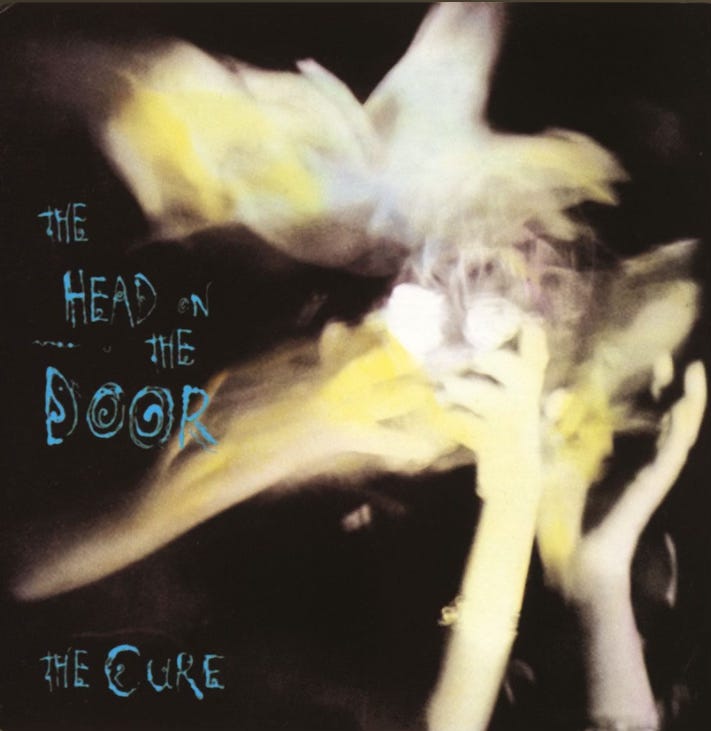
The Cure - The Head On the Door
There is a standard in the music industry now where you’re supposed to get to the hook of a song within the first 30 seconds. Not everyone abides by this, thankfully, but if you listen to older music, you’ll notice a lot more long intros, and I think this is a lost art. Both singles on The Cure’s The Head On the Door, for example, have long intros by modern standards (The vocals don’t come in for almost a minute on “In Between Days,” and 37 seconds on “Close To Me”). This might not seem like a lot but if you listen to any modern pop singles, things are a lot more condensed. While this may be a weird thing to get hung up on, in today’s ultra fast paced world, it’s nice to listen to artists who aren’t afraid to take their time. Gripes about modern attention spans aside, this record is a classic, and you should definitely give it a listen if you haven’t.
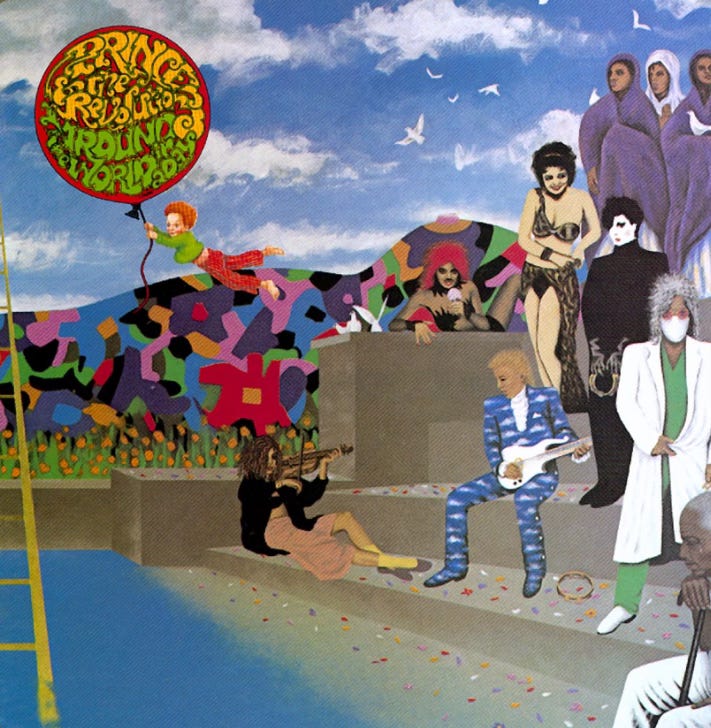
Prince - Around The World In A Day
I feel like everyone compares this album to Purple Rain, which was released the previous year. While both albums are great for different reasons, what I love about Around the World in a Day, is that it’s *not* Purple Rain. The production on Around the World feels a lot more raw than its predecessor, and many of the arrangements are pretty adventurous. I love the long intro to “Condition of the Heart,” (this seems to be a theme this week…) featuring dreamy piano swells, with some sparse percussion, and an alien sounding synth line. The psychedelic funk of “Tamborine,” and the social commentary of “America,” are two of my favorite moments on the album as well. Not to mention this album has, “Raspberry Beret,” one of Prince’s biggest hits of all time. This one might take a few listens to fully digest, but it is well worth sinking your teeth into.
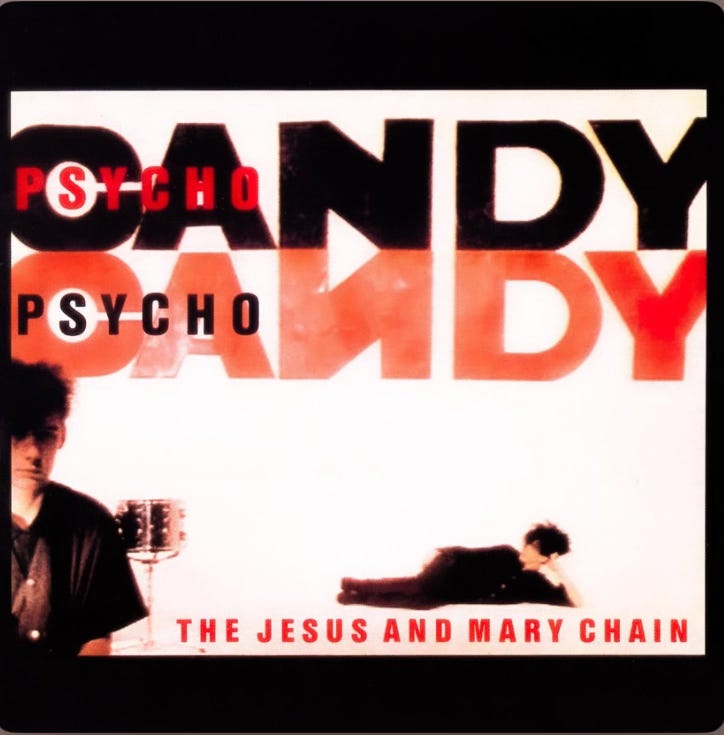
The Jesus and Mary Chain - Psychocandy
Both Death Cab for Cutie and Jimmy Eat World have referenced The Jesus and Mary Chain in their songs (“We Looked Like Giants,” and “Authority Song,” respectively. “Do you remember the JaMC?,” “The DJ never has it, JMC - Automatic”). I always say it’s a good idea to listen to your favorite bands’ favorite bands, so as a long time Death Cab and Jimmy Eat World fan, I figured I should check out the Jesus and Mary Chain.
What I found interesting about this record right off the bat is how, from a songwriting standpoint, a lot of the songs are written in a ‘60s pop style, but the arrangements are full of fuzzed out guitars playing power chords with amp feedback, creating this kind of abrasive yet atmospheric texture. It is retro and forward thinking at the same time. The Jesus and Mary Chain were early pioneers in the shoegaze and noise pop genres, and while I wouldn’t use those genre names to describe Death Cab for Cutie or Jimmy Eat World, I can see how both artists would have been influenced by this record.
I find myself with a newfound interest in shoegaze, so if there are other shoegaze bands you think I should check out, let me know!
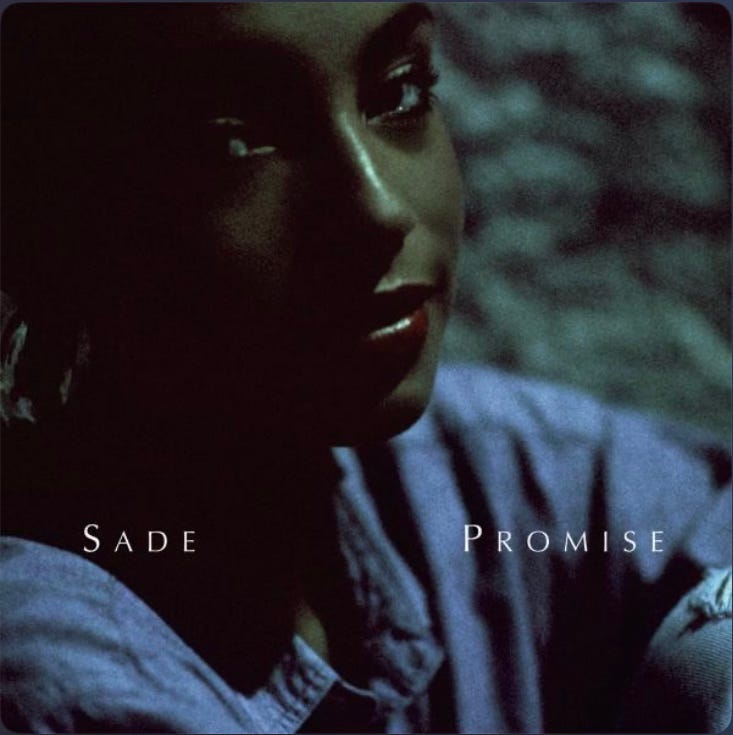
I had a neighbor during Covid who loved to play Sade records full volume in the middle of the day while enthusiastically singing along, and it made me realize that I don’t mind when neighbors play loud music, as long as they have good taste. My neighbors on the other side were a different story but let’s not get into that…
The jazzy chords, slick arrangements, Sade’s sense of melody, and the expression in her voice are what set this record apart from a lot of the music of the time. Sade knows when to sing with restraint, which makes the emotive moments all the more cathartic when she lets it rip. The band is heavily featured as well, (technically the band is called Sade? But also it’s the singer’s name? I did not know this). I plan on coming back to this record a few more times, because I don’t think I’ve fully absorbed it yet, but the lead single from the album, “The Sweetest Taboo,” is probably my favorite song from Promise at the moment.
While listening to this album on a walk, I wrote in my notes app: “Sax solo in ‘Punch Drunk’ *stank face*.” I think I will let that speak for itself.
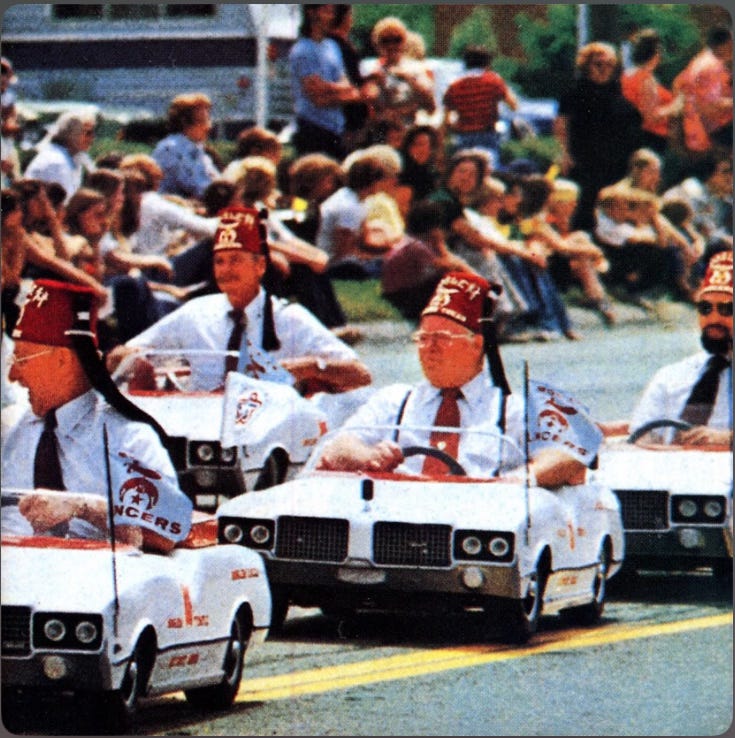
The Dead Kennedys - Frankenchrist
I honestly didn’t know what to make of this record at first. I am more familiar with Dead Kennedys’ first album, Fresh Fruit for Rotting Vegetables, so I was expecting this one to have a similar in-your-face punk rock sound. Some of the hardcore punk is still present, and the attitude is certainly still there, but the music is a lot more experimental. The reverb on the guitar in “This Could Be Anywhere,” as well as the trumpet towards the end of “M.T.V. Get Off the Air,” have a spaghetti Western vibe, while the synth parts in “At MY Job,” give the song an ominous feeling like it could be from a Tim Burton movie.
The album opens with “Soup is Good Food,” the title of which is a play on a Campbell’s soup advertising slogan, and the song deals with corporate layoffs and how human workers are deemed obsolete when jobs are automated by computers. Every song on this album is politically and socially conscious, and many of the themes are unfortunately still relevant today. “The Stars and Stripes of Corruption,” is a particularly anti-establishment song, and “M.T.V. - Get off the Air,” attacks the overly commercial music industry of the time (which might even be worse now, 40 years later).
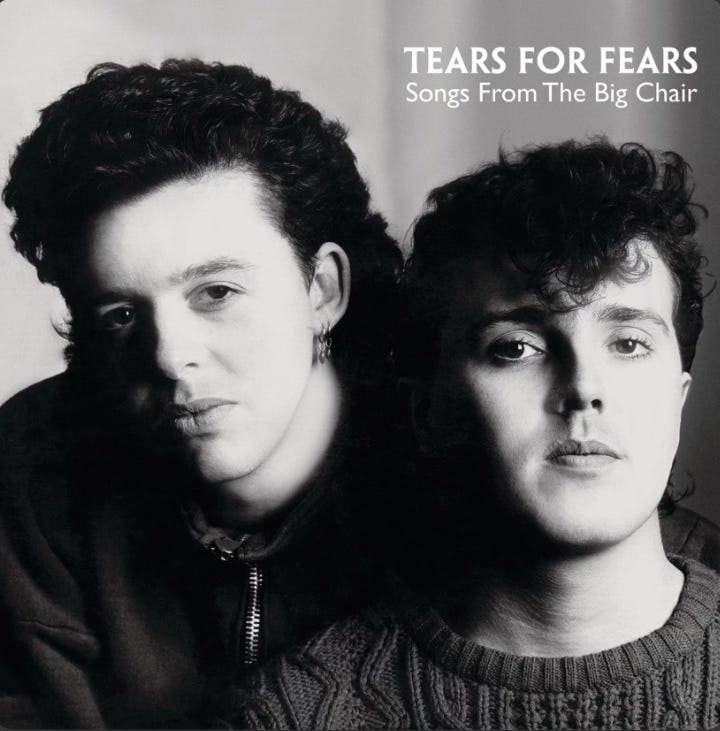
Tears for Fears - Songs from the Big Chair
This album is so good it almost makes me forgive them for using AI to generate their album art last year. I don’t always pick one favorite album of the year when I do these throwback listen-throughs, but this one might be my pick for 1985. Tears For Fears’ second album contains two of their most iconic songs, “Everybody Wants to Rule the World,” and “Shout,” but the non-singles are amazing too. “The Working Hour” is one of the best vocal performances on the album, and the mostly instrumental “Broken,” which is reprised in “Head over Heels,” is one of their more intense songs, and has one of their catchiest bass lines. I don’t know if it’s just the Donnie Darko nostalgia, but I am obsessed with this album right now.
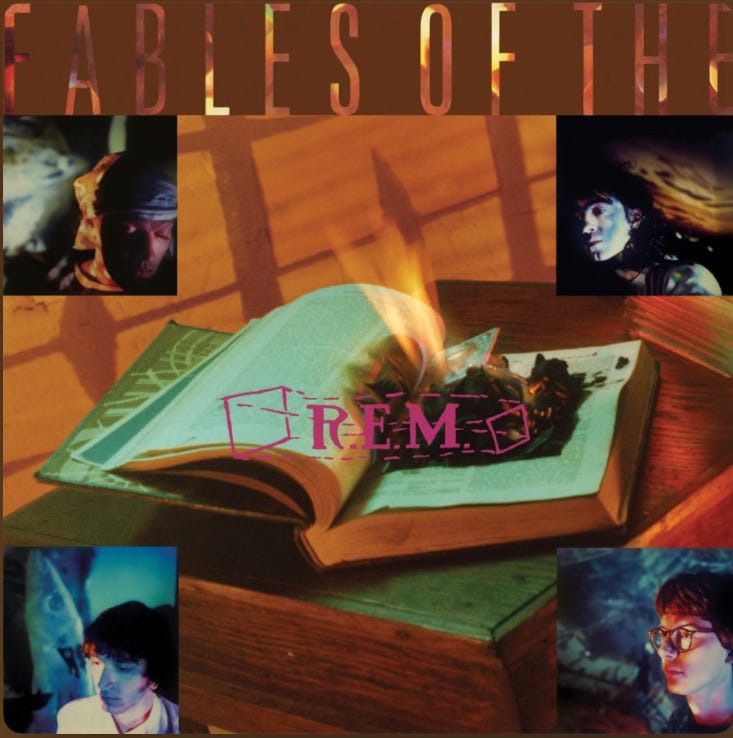
R.E.M. - Fables of the Reconstruction
I’ve been getting more and more into R.E.M. over the last few years, particularly their earlier stuff. R.E.M.’s third album, Fables of the Reconstruction feels ahead of its time, in that it reminds me of alt rock from the ‘90s more than anything out of the ‘80s. The album opens with a dissonant guitar line landing on the tritone kicking off the opening track, “Feeling Gravity’s Pull,” which I find instantly intriguing. A lot of the songs are typical for R.E.M. record (which I mean in a good way), although “Can’t Get There from Here,” has a funky Talking Heads vibe to it, and “Auctioneer,” feels like new wave at times, and also utilizes some interesting dissonance between the bass and guitar.
Peter Buck’s guitar playing is probably what draws me in the most on this particular record. His signature arpeggiated guitar parts and melodic lines are all over the album, and even when he plays open chord rhythm parts, he adds little picking patterns and slides and other embellishments to make the parts more interesting. As a guitarist, I’ve always preferred hearing inventive guitar parts rather than flashy shredding, but really it’s all about playing what is right for the song, and that’s exactly what Buck does.
—
I’ve been experimenting with how I want to approach this blog for the last month or so, and it seems like I’ve kind of landed on a format that makes sense to me. Basically, I’m trying to listen to an album a day, and write a short little blurb about it, then every Thursday (for #ThrowbackThursday, which I don’t think is a thing anymore), I’ll post the album blurbs from the week. Next week I’ll be listening to albums that turn 50 this year, so check back next Thursday for some music from 1975!