
2005 Album Throwback: Fall Out Boy, Death Cab for Cutie, Finch, Laura Veirs
This one makes me feel old...


This week we are going back to 2005 to look at some albums that turn 20 this year. 2005 is the year I graduated high school and started college, so the music I got into at the time represented new beginnings, and I still associate all of these albums with the excitement that comes with that transition into early adulthood.
If you have Apple Music, you can listen along with my 2005 playlist, and if you don’t, feel free to look up the albums on your streaming platform of choice. Or better yet, support your local record shop and buy the albums!
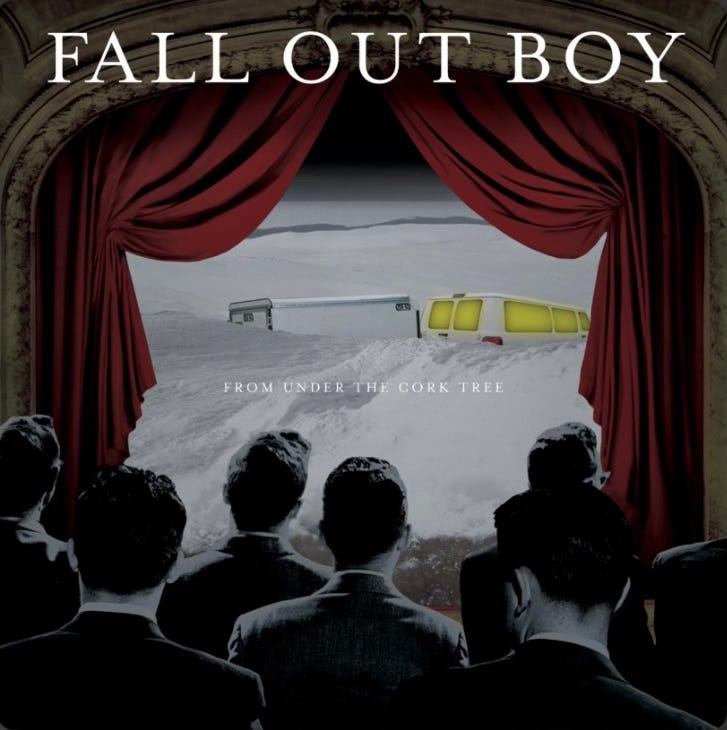
Fall Out Boy - From Under the Cork Tree
When I set out to listen to a bunch of music from 2005, I expected that some of the emo records I was into at the time wouldn’t hold up. I was surprised to find that I like Fall Out Boy’s From Under the Cork Tree even more than I did 20 years ago. Other than a few creepy lyrical moments that didn’t age well (there is an uncomfortable amount of watching people through keyholes and/or closet doors on this record), this album is catchy, full of variety, and just as exciting as it was in 2005.
From Under The Cork Tree lives in this sweet spot where Fall Out Boy were maturing as a band, but hadn’t fully sold out yet. There are a lot of interesting drum parts throughout the album. The second verse of “7 Minutes in Heaven,” is a great example where the drummer could have just stuck to a simple rock beat, but instead threw in intricate fills across the toms, and syncopated open hi-hat hits, which added some nuance to the arrangement. There are a couple songs that break out of the normal pop-punk style of the rest of the album, like “Get Busy Living or Get Busy Dying,” which is vaguely folky, and “I’ve Got a Dark Alley and a Bad Idea…” which has a 90s pop-rock sound. It’s one of those albums where the deep cuts are better than the singles - songs like “Of All the Gin Joints in All the World,” and “I Slept With Someone in Fall Out Boy and All I Got Was This Stupid Song Written About Me,” (ridiculously long song titles were a very mid-2000s emo thing).
Cork Tree also happens to be the only Fall Out Boy album that I like. Their first album always felt a little juvenile to me, and everything they released after Cork Tree was *puts on hipster glasses* too mainstream. Sometimes I hate a song so much it makes me viscerally angry and “This Ain’t A Scene, It’s an Arms Race,” was one of those times. It’s interesting how Cork Tree opens with a song where they poke fun at being trendy (“We’re only liars but we’re the best / We’re only good for the latest trends,” and then later on the album, “We only do it for the scars and stories, not the fame”), and then Fall Out Boy turned out to be one of the biggest trend chasing, bandwagon jumping bands of all time. I could say a similar thing about Panic! at the Disco who, also in 2005 wrote, “We’re just a wet dream for the webzine / Make us it, make us hip, make us scene,” (from a song with the ominously prophetic title, “London Beckoned Songs About Money Written By Machines”). It’s almost like in the mid 2000s it was trendy to not be trendy, and a lot of bands capitalized on this anti-trend trend. Panic! at the Disco, for example, were signed to Fueled by Ramen, an “indie” record label owned by Warner Music Group.
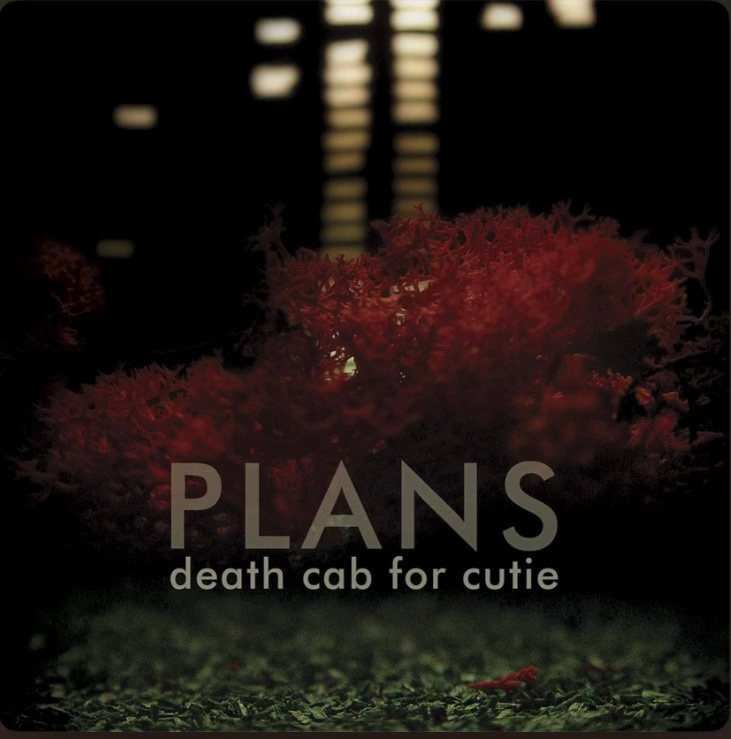
Death Cab for Cutie - Plans
I used to work at Marshalls, and I often refer to the kind of songs they played in the store, derogatorily, as “Marshalls Playlist Music.” The playlist was mostly basic stuff that doesn’t really grab your attention, but is pleasing and inoffensive enough to be the soundtrack to the average person’s day of bargain hunting - think Jason Mraz, early Taylor Swift, Snow Patrol, Kings of Leon, etc. One of the songs on the Marshalls Playlist I actually did like, was “Soul Meets Body,” by Death Cab for Cutie, from their 2005 album, Plans.
Plans, marks a shift towards a more mainstream sound (and unlike Fall Out Boy’s later albums, this isn’t necessarily a bad thing). There are elements of Death Cab’s early stuff that I miss on Plans, like the linear drum beat in “A Movie Script Ending,” the somewhat heavier moments in “When We Laugh Indoors,” and “We Looked Like Giants,” or the epic slow-building arrangement of “Transatlanticism.” Their first few albums were more raw, and they took risks, which to me makes for more interesting music, but it was smart of them to make a more universally palatable album at this stage in their career. They gained a much bigger following with this album, and with the stability that popularity gave them, they’ve been able to do their own thing ever since.
What made Plans work so well was they way Death Cab leaned into the soft-pop sound that bands like Coldplay made huge in the mid-2000s. This wasn’t much of a stretch for Death Cab, since they’ve always been on the softer side of indie-rock. As retail-ready as this album is, it still has plenty of interesting moments, like Nick Harmer’s bass line in “Summer Skin,” with its driving melody, changing registers on a dime. The chromatic piano chords during the verses of “Different Names for the Same Thing,” are also unexpected for the genre. This album always evokes a certain nostalgic melancholy for me, and in that way, Plans fits right in with the rest of Death Cab for Cutie’s discography.
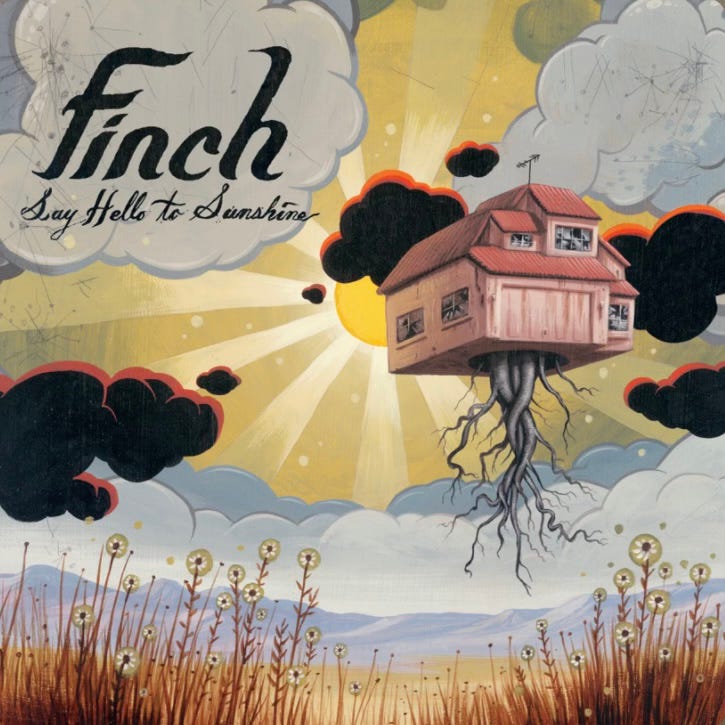
Finch - Say Hello to Sunshine
When I heard Finch’s second album dropped, I rushed to the CD store (that’s right kids, we used to have to go to a physical store to get new music), and listened to it the first chance I got. I was obsessed with their first album, What It Is to Burn in high school, so I was expecting more of the same screamo/pop punk of their first record. It turned out that they had completely abandoned their early style and went for a more aggressive post-hardcore sound with some hints of metal. This confused me at first, and I went through a whole roller coaster of emotions before ultimately deciding… this record rules.
One major change in their sound came from their new drummer, Marc Allen, who replaced their original drummer, Alex Pappas. Allen’s drumming is a lot more technical than how Pappas played on their previous album, which gives Say Hello to Sunshine an almost prog feel at times. Nate Barcalow’s voice got a lot stronger in between albums as well, particularly his screaming. The variety of screams he uses in “A Man Alone,” especially in the last chorus is mind boggling. His melodic singing on this record is impressive as well. One of my favorite moments on the album is at the end of the bridge in “Reduced to Teeth,” where he hits a note in a way that is dramatic and almost theatrical (“somehooooow he must have been predicting the fall”).
As much as I still love Finch’s first album, Say Hello To Sunshine is so much more interesting, and shows massive growth for the band. While there are no choruses as catchy as “Letters to You,” on this one (“Fireflies,” is probably the closest it gets), this is an album that rewards multiple listens, and 20 years later I am still finding new things to love about it.
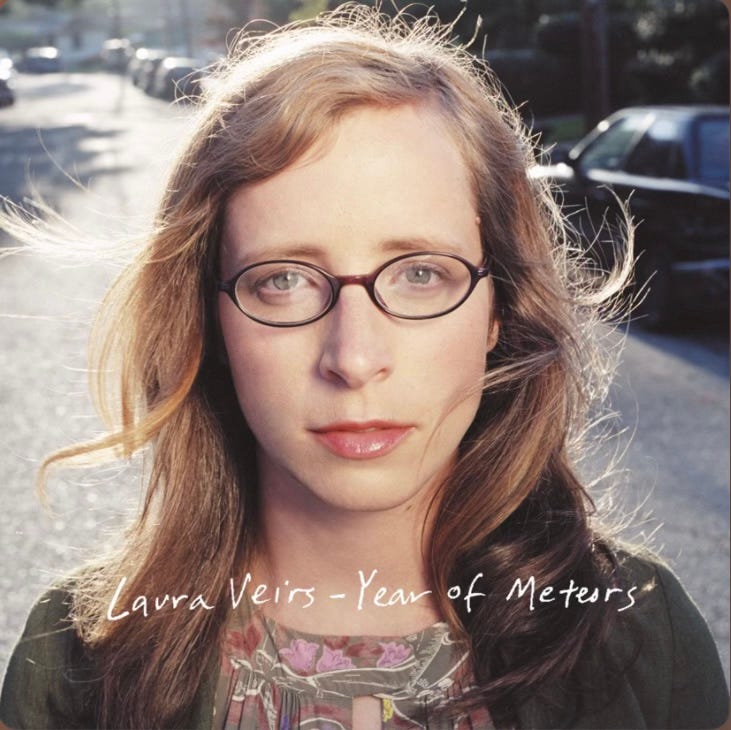
Laura Veirs - Year of Meteors
When trying to find new music to get into, it’s always a good idea to start with the music you already like, and branch off from there. For example, I found Laura Veirs because she was featured as a guest vocalist on The Decemberists’ song, “Yankee Bayonet.” The Decemberists have collaborated with many other artists over the years, like Gillian Welch, Shara Nova from My Brightest Diamond, and Peter Buck from R.E.M., so there is always a rabbit hole to go down when you listen to The Decemberists.
The first Laura Veirs record I checked out was Year of Meteors, and I wasn’t sure what to think of it at first, but after a few listens I became obsessed. The combination of fingerpicked acoustic guitar with electronic beats in the first song, “Fire Snakes,” is a really cool texture that you don’t hear very often. There are a lot of atmospheric synth sounds throughout the record that give the feeling of floating through space, which mirrors a lot of the lyrics on the album. In “Through the Glow,” her vocals bounce back and forth from the left to right speaker, adding to the feeling of being disconnected from gravity.
While Year of Meteors is a folk record at heart, it goes in a lot of unexpected directions like “Black Gold Blues,” which is a rock song with distorted guitars and a pounding drum beat. It should feel out of place but it doesn’t. Laura Veirs is an artist who is going to do her own thing no matter what, and I think that’s one of the things that drew me to her music. I always love artists who are hard to define because they are more about honesty in the music than fitting into a scene, and I always find that more interesting to listen to.
Next week, get your Pogs, Beanie Babies, and JNCO jeans ready, because we’re going to listen to some albums from the 90s! See you then.